
diff options
| author | Xe <me@christine.website> | 2022-09-05 17:44:24 +0000 |
|---|---|---|
| committer | Xe <me@christine.website> | 2022-09-05 17:44:24 +0000 |
| commit | 48c3d13ef15a324e5caf63ce7e92fab5073b29ac (patch) | |
| tree | e1135915cc10d005425416c422deaa4f540515bf | |
| parent | c36d2413ae7887d0ca1737f565e30fa5b2924949 (diff) | |
| download | xesite-48c3d13ef15a324e5caf63ce7e92fab5073b29ac.tar.xz xesite-48c3d13ef15a324e5caf63ce7e92fab5073b29ac.zip | |
rustconf 2022 talk page
Signed-off-by: Xe <me@christine.website>
| -rw-r--r-- | talks/rustconf-2022-sheer-terror-pam.markdown | 483 |
1 files changed, 483 insertions, 0 deletions
diff --git a/talks/rustconf-2022-sheer-terror-pam.markdown b/talks/rustconf-2022-sheer-terror-pam.markdown new file mode 100644 index 0000000..bf47502 --- /dev/null +++ b/talks/rustconf-2022-sheer-terror-pam.markdown @@ -0,0 +1,483 @@ +--- +title: The Sheer Terror of PAM +date: 2022-09-05 +slides_link: https://cdn.xeiaso.net/file/christine-static/blog/rc2022/slides.pdf +--- + +# The Sheer Terror of PAM + +Hey all, this is my [RustConf 2022](https://rustconf.com/) for 2022! I'm super +excited to _finally_ be able to share this page publicly. Enjoy the talk! I've +included a video of it, my script and slides embedded below and finally a link +to the slides PDF at the bottom of the page. Choose how you want to enjoy this +talk. All the options are vaild. + +<xeblog-conv name="Cadey" mood="enby">Be well all!</xeblog-conv> + +--- + +<center><iframe width="560" height="315" src="https://www.youtube.com/embed/BleS-MHLn7s" title="RustConf 2022 - THE SHEER TERROR OF PAM by Xe Laso" frameborder="0" allow="accelerometer; autoplay; clipboard-write; encrypted-media; gyroscope; picture-in-picture" allowfullscreen></iframe></center> + + + +Hi, I'm Xe Iaso and today I'm going to get to talk about existential terror. I'm +going to talk about The Sheer Terror of PAM, the authentication and +authorization framework for Linux and UNIX systems. By the end of this talk you +should have a clear understanding of what PAM is, why it exists, why it sucks, +and the horrors I encountered while writing a PAM module in Rust for work. + + + +Like I said, I'm Xe Iaso. I'm a blogger, student of philosophy, and an aspiring +fiction writer. Professionally I work at Tailscale as the Archmage of +Infrastructure doing developer relations stuff. It's worth noting that I'm not +speaking for Tailscale in this talk, but I am speaking about a project I worked +on at Tailscale. Any opinions are my own. + + + +Authentication and authorization are two similar sounding concepts, but they are +subtly different in ways that really set them apart. So that everyone's on the +same page, here's my SRE cliffs notes version of the terms. + + + +Authentication is what makes sure you are who or what you say you are. This is +what we use passwords, spicy hardware dongles that pretend to be a keyboard, and +Google Authenticator codes for. This only proves the identity of a person or +service though. + + + +Authorization is what makes sure that you are allowed to do something. This is +why you get those annoying user access control prompts on windows or asked to +scan your face to install apps on an iPad. + + + +The difference between the two is that authentication would be Kirby confirming +who he is as the reincarnation of the god of death and authorization would be +making sure Kirby has permission to recreate the world in his image. He is +authenticated as the reincarnation of Dark Matter but he would not be authorized +to use Star Dream to reshape Planet Popstar to his will. + +<xeblog-conv name="Cadey" mood="coffee">Sorry for the major spoilers for every +Kirby game there. Kirby lore. Quite something.</xeblog-conv> + + + +So, now that we know what authentication and authorization are, let's talk about +the one library that everyone across most Linux distributions, Unices and Macs +use for this: PAM. + +PAM is an authentication and authorization framework for Linux and UNIX systems. +It's not really one implementation, but they're all similar enough that we can +pretend they are one big happy implementation just to keep things simple. + + + +The biggest thing that PAM does that the things that came before it doesn't are +that PAM allowed administrators to set up policies for how people could connect +to computers. Today this means you can set up rules that match your buzzword +compliant policies. + + + +PAM is the result of the 90's making the computing world a lot more complicated +when multiple computers got into the mix. PAM came around after people realized +that storing password hashes for everyone in the system wouldn't work very well +if you made that file with all the password hashes world-readable. + +Computer security was a vastly different thing when the whole world ran on +paper, eh? + + + +PAM was made by the Java people: Sun Microsystems. PAM was intended to help +replace other competing implementations of tacky directory server integration +(like shoving all of the password database into DNS) and get rid of the existing +legacy cruft that developed organically over the years. + +It is kind of amusing that PAM in all its incarnations is now the organically +grown cruft that it was set out to replace. + + + +But computers got faster at crunching numbers and with that storing more +important classified work, so something had to give. Imagine how bad it would +have been if hackers could grab your password hash over DNS and send it to a +cluster of 4 whole PDP-11 minicomputers to crack it. + + + +PAM ships with a bunch of modules that let you check passwords against the local +password database, run arbitrary commands on the system, check for account +expiration or password aging, and change your password. + + + +By the way, that "changing your password" thing was something that I had a +misconception about for a while when I was learning this. When I read the manual +pages out of Ubuntu, I thought that password modules were for customizing what +password checking rules were in place. I admit I made an assumption on +incomplete information, this stuff is hard to research. + +Turns out that password modules in PAM are for changing your password, not for +changing the authentication logic for using passwords. The FreeBSD handbook +helped clear that up for me. FreeBSD has amazing documentation by the way, check +it out sometime. + + + +At the time C was the best thing since canned bread, so PAM was written in C. +Each PAM module was implemented as its own shared library file also written in +C. + + + +And this worked for the time that it was made for. It met all the needs and it +had extensibility by both systems administrators and software distributors. It +worked great for its time. + + + +However it's not the 90's anymore. It's 2022. Password theft is rampant. The +computer in most display controllers on fancy laptops can rival the computers +that PAM was designed for. Two factor auth is mandatory for securing access to +production. And to top it all off, somehow society has agreed that OAuth2 and +OIDC are decent standards. C has aged about as gracefully as milk in a desert, +which makes it really easy to write arbitrary code execution bugs that also do +something useful sometimes. + + + +But we still have PAM in every Mac, Ubuntu server and all over the cloud. We +will probably still have to deal with PAM for a very long time. It's been around +for about 25 years now and the longer something is around the longer it'll take +to get rid of it. However, it's so ubiquitous that you can take advantage of +this to make your servers do whatever you want on login. + + + +One of the really cool features of PAM is that every service on the system can +have its own rules. When an application starts an authentication session with +PAM, it supplies a service name. This service name is used to enable +administrators to set up policies for that service in particular. + + + +At a high level, each service has a stack of configuration rules. Each of these +rules tells PAM which one of the modules it should use and how PAM should react +to the module's return codes. It also lets you jump around the stack and then go +towards whatever you want. + + + +Hmm, kind of reminds me of a certain language construct. Can't place my finger +on what it is. Hmmm. + +<xeblog-conv name="Numa" mood="delet">goto!</xeblog-conv> + + + +There is an upside to this though, combined with service-specific configuration +this means you can set rules like "logging in with a password also requires you +to use a Google Authenticator code" or "when a login succeeds, log it to Slack +or Discord", or even "if the user gives you a password, reject the +authentication session". With this you can make it difficult to do the wrong +thing. It's just annoying to debug. + + + +You may be wondering something like "how do you debug this?" + + + +Conveniently, PAM has logging calls all over the place. But additionally +conveniently they are all removed at compile time in most Linux distribution +packages. + + + +So the answer of how you debug stuff in PAM boils down to "carefully". You debug +it carefully. You know what, here's a story of my first time debugging a custom +PAM module. + + + +My goal was to try and make a PAM module for Tailscale. Tailscale is kinda like +a VPN (but not a "privacy" VPN) and one of the neat things about Tailscale IP +addresses is that you have a 1:1 mapping of IP addresses and users. As a result, +this means you can use Tailscale as an authentication layer. + + + +So after some frantic hacking I had this module and from everything I could tell +it should have been working. I had it configured as an authentication module at +the top of the stack, I made it put a "please god be working" message into +syslog, I tried to make it print things to standard out, nothing was working. So +I started googling "how to debug PAM" and got answers on forums from 2002 that +mentioned Classic Red Hat Linux and Slackware as if those were the only two +distributions that exist. + + + +Of course that didn't work, so I needed to get a debugger into the mix. After +looking over the various options at my disposal, GDB seemed the least painful. I +also kind of remembering using it in college. A decade ago. + + + +So I started SSHD in "debug" mode under GDB and then set a breakpoint for pam +underscore sm underscore authenticate. If I set this breakpoint, then surely I +get debugger access to PAM at that point. I started SSHD and tried to connect. + + + +Authentication failed. No breakpoint was triggered. + + + +Nothing useful except GDB happily telling me that SSHD exited with exit +status 0. A successful. exit. code. + + + +So I looked around some more to see if there was any decent documentation. I had +to dig really deep. Really really deep. + + + +I eventually found what I was looking for in a SunOS manual that was so old it +was a HTML frameset in the internet archive. Somehow only the content of the +page was there and the rest of the frameset had degraded. But, I got a bit of C +code that let me manually invoke PAM so that I could test a module manually. + + + +So, it turns out that when you authenticate with PAM, under the hood PAM calls +the dlopen system call on the target modules in the configuration file. dlopen +is a C library call that lets you load a shared library file from the disk into +memory and then call functions in it as if they were functions that were +compiled into the heccin' binary in the first place. + + + +Just like Java. The Sun Microsystems influence had to go somewhere! + + + +So what I need to do is not set my breakpoint on dlopen, but I need to set it +on a similar function named dlsym. dlsym is like dlopen, but it lets you get the +address of a function out of a dlopen handle and run it. + +Based on past experience maintaining a tire fire of a chat server that used +dynamically loaded C modules everywhere, dlsym should normally be called just +before the function gets called. I validated this against the little test +program that the SunOS manual gave me and everything worked. I even got the +syslog calls like I expected. Then I tried it again with SSHD and I got a +breakpoint at dlsym! + + + +I win! I have a step in the right direction! So I asked gdb for the stack trace +to debug further. And... + + + +...I get a bunch of useless function pointers. This was confusing but then I +figured out what was going on. + + + +Ubuntu strips debug symbols from binaries in the packages they release to +consumers, which will make stack traces full of hex pointers instead of names. +However you can download the debug packages to get the names back. After +remembering the right apt incantations, I was able to dig through the source +code in parallel to the debugger session. After hacking around for a while I got +nowhere, but in so much detail. I put an SOS message off in a Slack and signed +off for the day. + + + +Next morning I woke up and checked Slack. A coworker had a suggestion and it +broke me a bit. But to understand why, let's look at SSHd again. + + + +Ubuntu's default SSH server is OpenBSD's OpenSSHd. OpenSSHd doesn't ship with +PAM support on by default because the OpenBSD people think that's insecure. I +can't blame them. Yoloing in binaries off the disk, plucking functions out of +them, and jumping to them while hoping they work is not safe at all. So they +added a configuration option called ChallengeResponseAuth that nerfs most of the +fun that PAM can have. It's off by default in Ubuntu. Turning that on made +everything work instantly. + + + +It was that easy. It did everything I wanted, including logging things to +syslog. + + + +With all that in mind, let's talk about the drawbacks of PAM's design that I've +learned. + + + +Most of PAM's safety is predicated on everyone following the rules and doing +things as safe as possible. When a PAM module is loaded into a service, the code +in that module can't assume practically anything about what's going on. It can't +assume what user it's running as, what files it has access to, if it has access +to the network stack, or even if it has anything at all. Much less when +sandboxes and containers are in play. + +In practice, basically every PAM service runs either as root or as effectively +root. So this means that you can usually rely on having access to anything that +root can, but assume you don't. + +<xeblog-conv name="Mara" mood="happy>This is why I'm calling it "as safe as an +earthquake". If you follow the building code to the letter and do absolutely +everything correctly, you're fine. If you don't, oops the preschool building +made out of asbestos just cracked in two with all the kids hiding in it. Good +luck with that!</xeblog-conv> + + + +One of my friends is a hardcore C advocate. He has made a bunch of things in C +that nobody should try to make in C, such as web applications. This person also +adamantly claims that C has a type system so it's clearly safe to do that. + +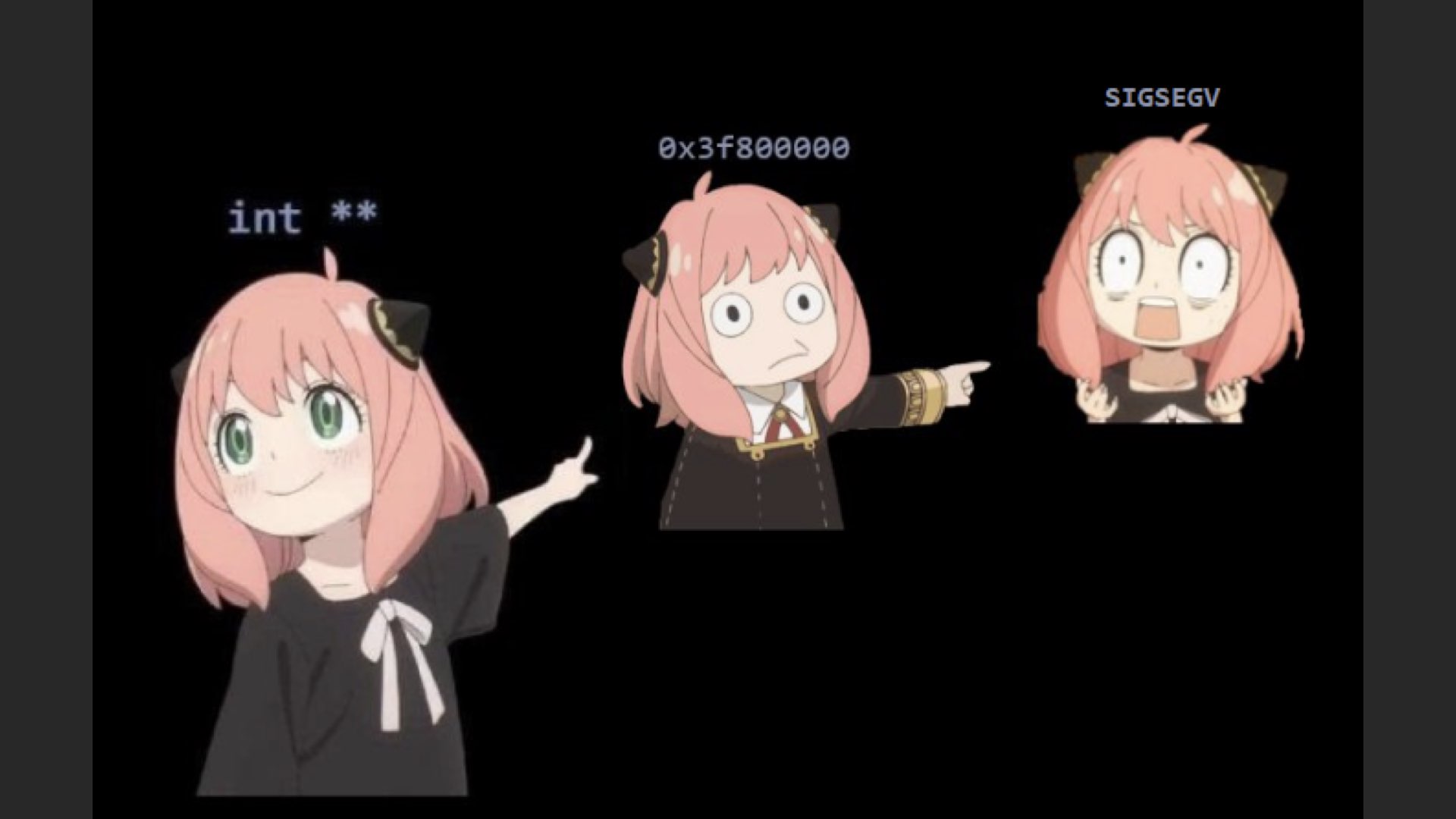 + +Except I can find no evidence of C having a type system outside of it just being +"numbers that the machine knows how to deal with" and "hoping everything goes +into the right places". The epitome of this is the yolo pointer, also known as a +void pointer. A yolo pointer points to some address in RAM. Where is it? Don't +know. Does it contain anything useful? Hope so. How do you know what the data +is? Look at it. + + + +By the way this works for function pointers too. You can make a pointer to a +function out of a void pointer. Interestingly, this is how that Games Done Quick +run of Ocarina of Time where they collected the Triforce worked. Nintendo wrote +all their games in C at the time and used function pointers all over the place. +So speedrunners just wrote their own function pointers with the control stick +angle and buttons and got code execution. + + + +A wise friend of mine said "hope is not a strategy". Hope is the strategy when +dealing with yolo pointers. + +PAM uses these everywhere with "items" associated with the PAM handle. This +means that from a type system level you can put the integer 42 into the "remote +IP address" string field and the compiler will be like "yeah sure whatever". But +at runtime you can get a segfault out of nowhere if someone messed up. Most +people do follow the rules though, so this usually works out. + + + +PAM was designed to have a fairly flexible configuration framework _for systems +administrators_. + +But one of the things they did not do at the PAM level is make it easy to have +third parties slipstream PAM modules into the main system without having to have +deep knowledge of the PAM stack and everything it does. + +In practice, this means that each distribution has its own PAM configuration +mechanism and base PAM configuration to deal with, and the documentation +standards for how to do that can be poor. + +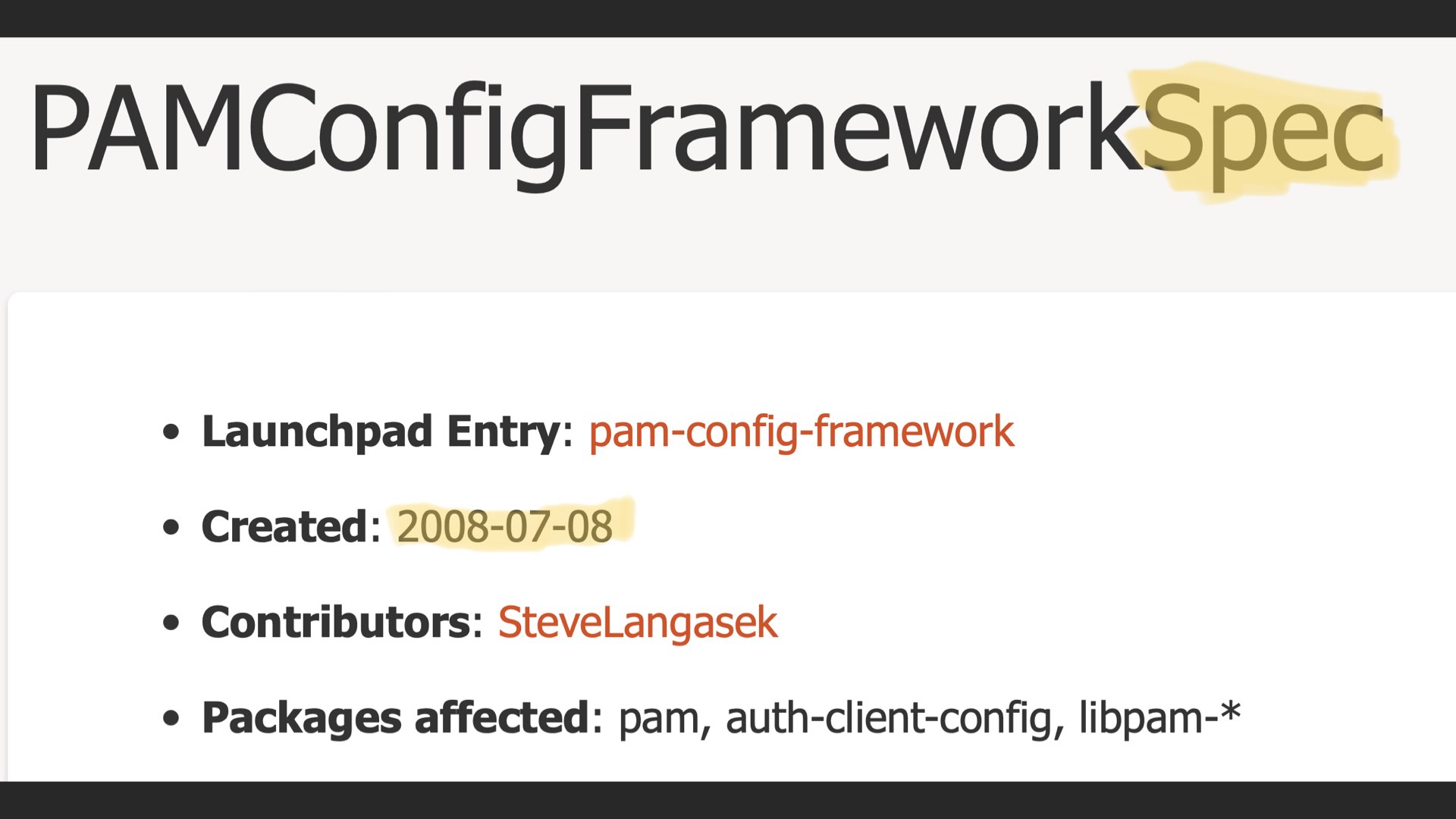 + +And by "poor" I mean "the only documentation is a design document deep in the +archives of the Ubuntu community wiki". Thankfully this was accurate, but +realizing that the only documentation is a specification is not a good feeling. + +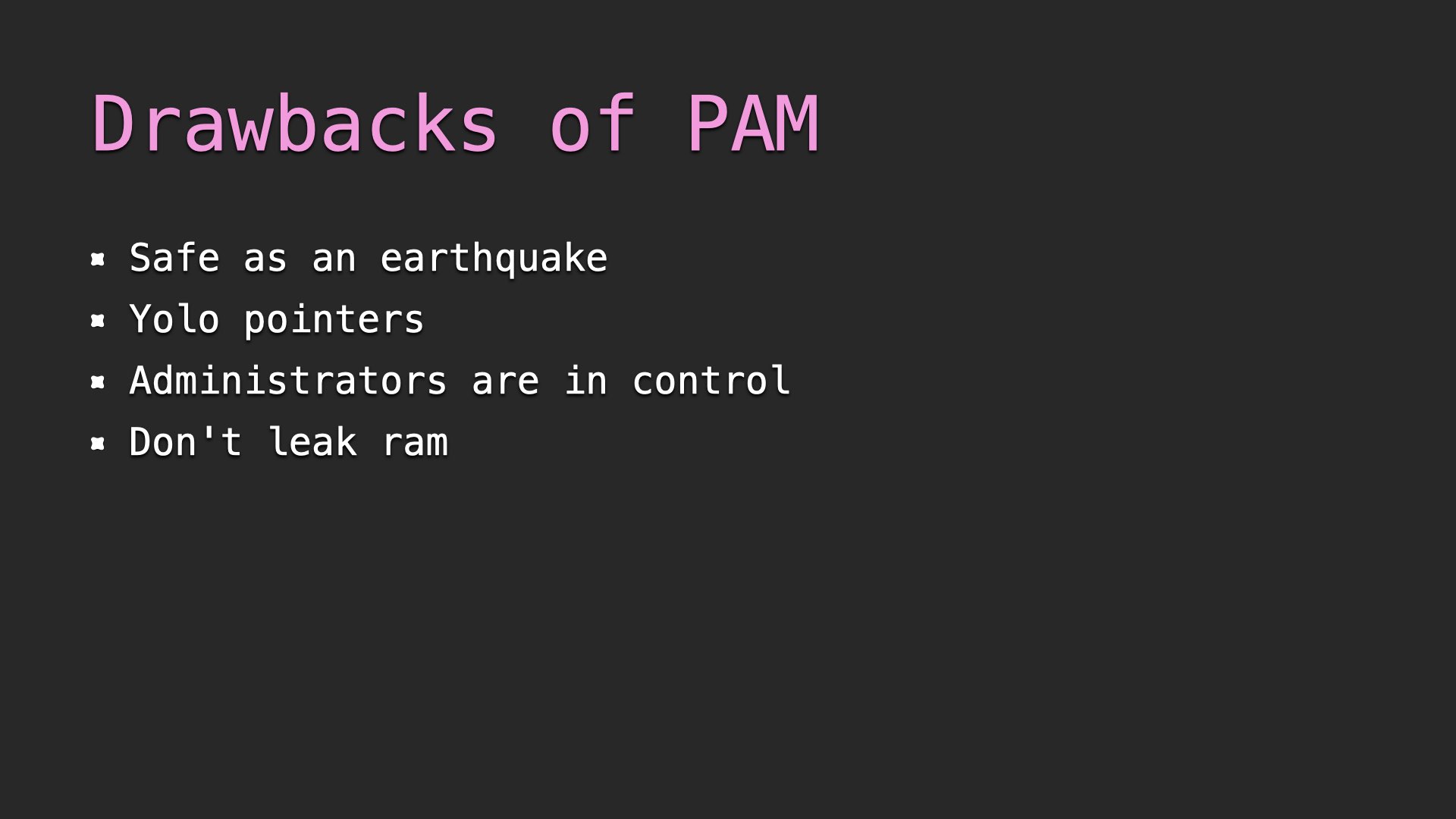 + +When you are linking Rust code into C code, you need to be very sure that you +are not leaking memory in any way. It will never be freed. Rust is usually good +about not letting you leak memory on accident, but there are a few ways you can +leak it on purpose. + +<xeblog-conv name="Numa" mood="delet">Don't.</xeblog-conv> + + + +While I was off on my magic adventure into PAM land, I learned these lessons for +dealing with PAM in the future: + +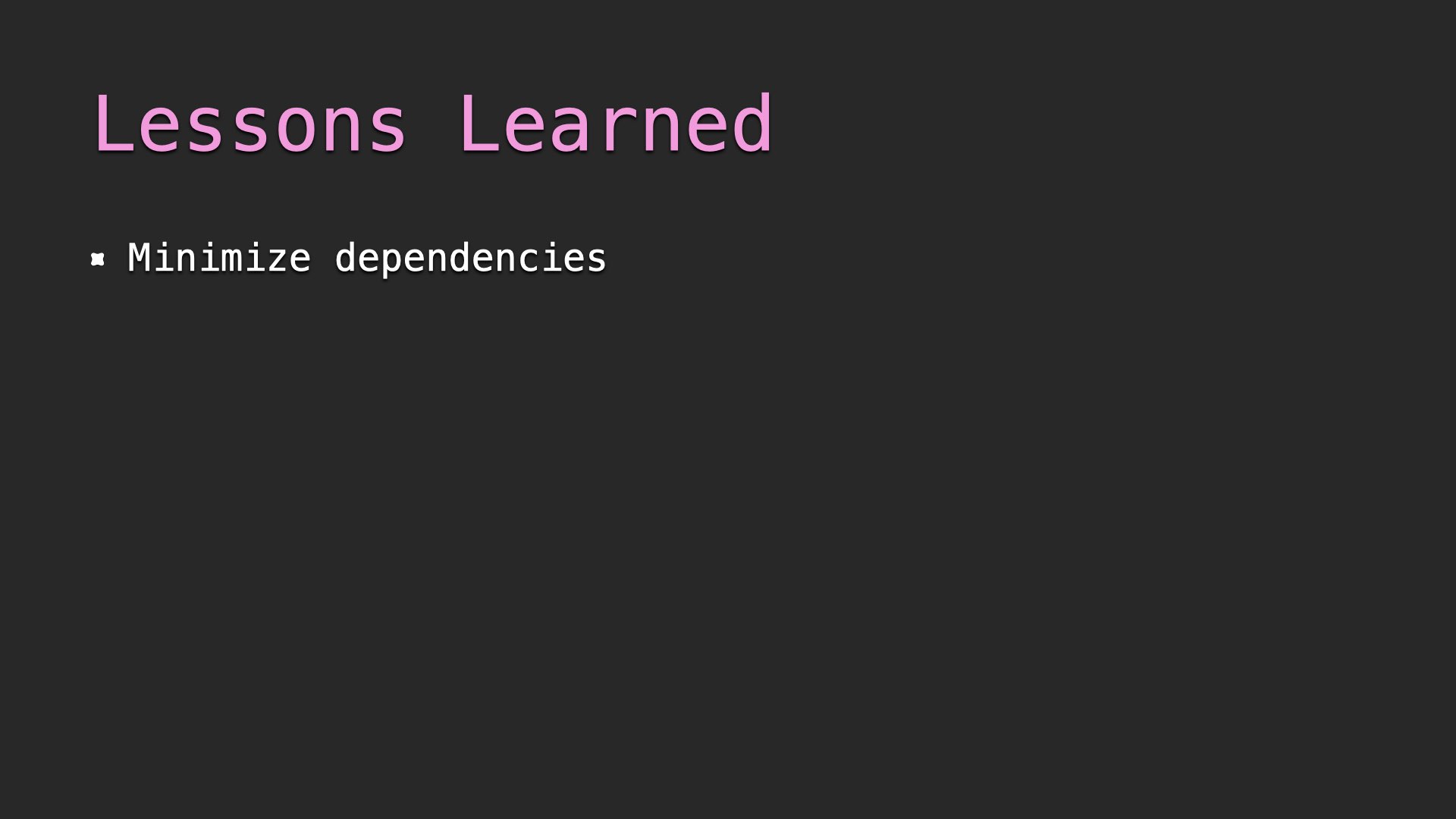 + +When you are writing security-critical things like this, it's best to be very +careful about what dependencies you bring in. Keep the list small. If one of +those gets owned, so does production. This can be "bad". + + + +If you keep the scope of your PAM module small, you don't have to worry about +scope creep. If you set out to do one thing, do that one thing and stop. Don't +overthink this. If you need to do multiple things, write multiple PAM modules. + +<iframe width="560" height="315" src="https://www.youtube.com/embed/HjbfjCPuO2Y" title="YouTube video player" frameborder="0" allow="accelerometer; autoplay; clipboard-write; encrypted-media; gyroscope; picture-in-picture" allowfullscreen></iframe> + +Less is so much more. + + + +Using PAM in general doesn't let you make very many assumptions about service +configuration stacks. There could be just about anything going on there. + +Using PAM on Ubuntu 22.04 lets you make a lot of assumptions about the stack. +Plan for the today that is, not the tomorrow that might be. + + + +In practice, you should not use handwritten bindings to any C library like I did +when I implemented tailpam. Use tools like bindgen. They're there for a reason. + + + +Also make sure that your code is fast. Authentication can happen surprisingly +often. If authentication hangs, that makes people get worried. SRE adrenaline is +a very powerful force. Be careful with it. + + + +In conclusion, PAM seems like a sheer terror at first but it's really just a +weird C library that everyone standardized on. It's fairly easy to extend with +custom logic in C or Rust, and it allows you to do whatever you want with +whatever you want. It's the industry standard, used by small scrappy startups +like Google, Facebook, Amazon, and Apple. And you've used it nearly every time +you've logged into a Linux desktop. + +It's kind of terrifying, but at least it's everywhere. If you grab some random +Linux/Unix off the shelf you can likely see PAM in there somewhere. Unless +you're using OpenBSD or something, they describe PAM as "an ugly pile of hacks" +and oh boy I cannot agree more. + + + +Before I get all of this wrapped up, I just want to take a moment to shout out +everyone on this list for helping make the talk shine. + +Thank you all! + + + +And thank you for watching! I'm going to stick around in the chat for questions, +but if I miss your question somehow and you really want an answer to it, please +email it to rustconf2022 at xeserv dot us. + +I will have the written form of this talk up on my website tomorrow, including +my slide deck and everything I've said today. + +If you have questions, please speak up and ask them. I am more than happy to +answer them. + +Be well, all. + |